
Getting Started with Your Raised Garden Bed
Backyard Farmer’s Raised Garden Beds are the perfect solution for growing fresh veggies, herbs and blooms in your patch. Begin your home growing journey today with our simple quick start guide.

Raised garden beds are one of the easiest and most effective ways to grow vegetables, herbs and leafy greens at home. Whether you’re working with poor soil, a paved courtyard or a small backyard, a raised bed gives you complete control over your growing environment — and fast results.
With guidance from Paul West from Grow It Local, here’s how to build a productive raised garden bed using the Backyard Farmer Large Raised Garden Beds and Medium Raised Garden Beds.
Paul explains raised beds offer several big advantages for home growers:
• You can fill them with high-quality soil, even if you live somewhere with poor soil
• They’ve got defined edges, making weed control easier
• Can be built on hard surfaces like concrete and pavers
• They can be built up to be more accessible for growers with mobility limitations
• They’re clean, organised and great-looking in any outdoor space

For assembling your raised garden bed you’ll need to find a flat, open spot that gets morning or midday sun* and is close to a water source. Raised beds drain well and warm quickly, but that also means they can dry out faster.
*Sunlight is one of the biggest factors in a successful veggie patch. Paul’s rule of thumb: minimum six hours of direct sun a day.
Once you’ve chosen your area, to prep simply trim back any grass or groundcover (a quick whipper-snip is usually enough).

Backyard Farmer Raised Garden Beds are designed to be assembled in minutes. Just lay out the panels in the configuration that suits your space, the modular design gives you plenty of options.
Following Paul’s recommendation, assemble the bed completely before placing it, using the provided pins to lock each panel into place. It’s quick, sturdy and beginner-friendly.

This step is optional but strongly recommended by Paul. Add a thick layer of cardboard as a natural weed suppressor. This blocks out light which prevents grass from growing through and the cardboard gradually breaks down to nourish your soil. You can also use weed matting here, but cardboard is an easy, low-waste option that avoids using plastic.

We recommend approx. 80L soil for a Medium Raised Garden Bed and 150L soil for a large.
For his project, Paul combined a Large Garden Bed and a Medium Garden Bed which required around 250L of premium potting mix (five 50L bags), remembering his base layer of cardboard also took up some room.
For the best results, Paul recommends to choose a mix with the five-tick Australian Standards symbol soil and also add compost or worm castings to help kick-start soil health and give your plants the nutrients they need to thrive.

Your raised bed is now ready for planting. For faster results, Paul suggests using seedlings, rather than seeds - especially for leafy greens and herbs.
Great choices for raised beds include thyme, oregano, dill, silverbeet, mustard greens, tatsoi and mizuna. Plant densely for a lush, productive patch.

Once you’ve planted out your garden bed, give your plants a gentle but thorough soak after planting. Fresh potting mix can dry out more quickly, so check moisture regularly during the first few weeks.
Paul notes that raised beds, especially ones filled entirely with potting mix, often need more frequent watering until the soil structure develops and that consistent moisture helps seedlings establish quickly.
With just over an hour of work, you’ve built a raised garden bed that will soon be overflowing with homegrown produce. In just a few weeks, you’ll see leafy greens and herbs filling out the space — and in a couple of months, you’ll be harvesting fresh, homegrown food straight from your backyard.
If you’re looking for an easy, beginner-friendly and cost-effective way to start growing, explore the Backyard Farmer Raised Garden Bed range at Bunnings Warehouse.
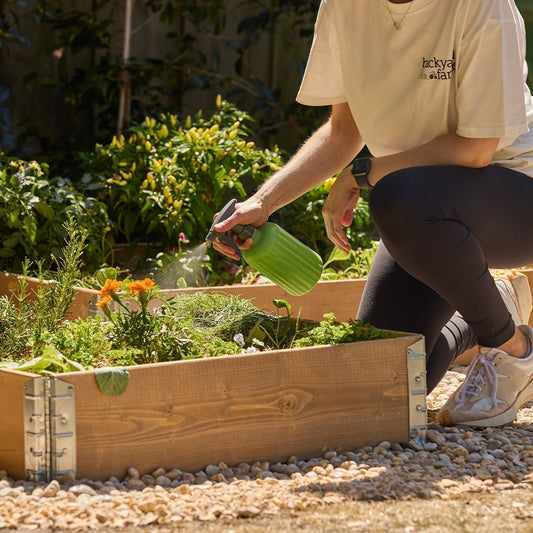
Backyard Farmer’s Raised Garden Beds are the perfect solution for growing fresh veggies, herbs and blooms in your patch. Begin your home growing journey today with our simple quick start guide.
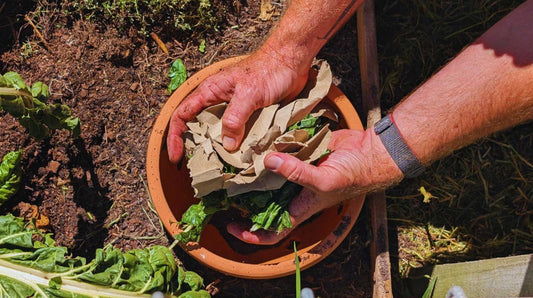
Kitchen scraps don’t belong in the bin, they belong in your garden. With tips from compost king Paul West from Grow It Local, discover how to turn kitchen waste into rich soil using worm systems like our Archie In-Ground Terracotta Worm Farm.