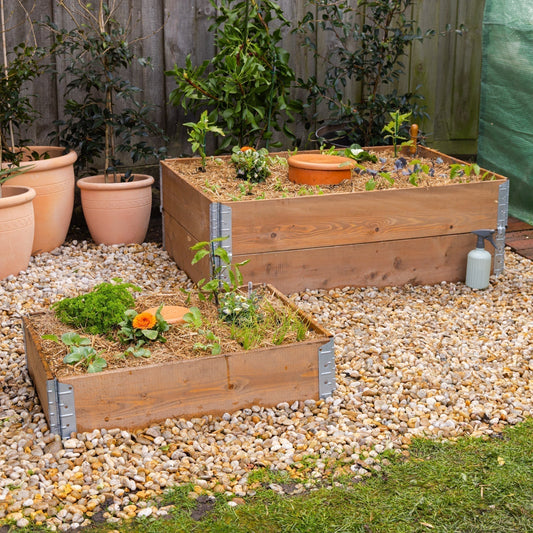
If you dream of basketfuls of garden-fresh vegies, but you’ve got tough growing conditions or limited space in the ground, raised garden beds are the way to go. They’re easier on your back since you don’t have to bend as much and they’re the perfect height for harvesting—even for little green thumbs. Best of all, you get to choose the soil mix, so they’re ideal if your garden soil is less than perfect.
Unlike in-ground gardens, raised beds allow you to choose or create a custom soil mix to meet the needs of your plants and the right mix can make all the difference. It has the perfect balance of air and water, holds moisture without becoming waterlogged, drains well and contains organic matter for steady, long-term feeding. It also encourages beneficial microbes, maintains the right pH for nutrient availability and provides the ideal environment for strong root and plant growth - which means healthier plants and a bumper crop of fruit or flowers.
What should make up your raised-bed mix?
- Compost - boosts fertility, improves soil structure, helps retain moisture and supports healthy soil life.
- Topsoil or garden soil - is the foundation of a raised bed—it provides the structure and minerals that plants need to thrive.
- Aeration materials—such as coarse sand, pine bark fines, perlite or horticultural grit—improve drainage, help to keep soil loose, increase oxygen availability, support soil structure over time and help prevent compaction.
The good news is that most of the hard work has already been done for you. If you’re after an easy option, most garden centres and landscape suppliers offer ready-to-use raised garden mixes. But if you like a more hands-on approach, then there are lots of different recipes that you can explore to meet the growing needs of different plants.
If you’re starting out, an easy-to-use blend for most plants is about 1/3 compost, 1/3 topsoil, and 1/3 aeration material, but it can be tweaked for the plants you’re growing.
The ideal soil mix for growing vegetables
Raised beds are the perfect choice for growing a thriving crop of vegies and herbs—more root space, better soil, better drainage, fewer pests, and easier maintenance.
Most vegetables thrive in loose, crumbly, well-drained soil that’s rich in organic matter and not heavy or compacted. If you’re growing vegies in a raised bed, it often pays to increase the proportion of compost and topsoil or garden soil—but avoid using too much compost, or the mix could become overly rich and lose structure over time. Steer clear of heavy clay soil or fresh manure, which can burn roots and encourage excessive leaf growth at the expense of flowers and fruit. Here’s a good starting mix for raised vegetable beds.
40% compost (bagged or home-made)
40% topsoil or screened garden soil
20% aeration material (coarse sand, pine bark fines, perlite, horticultural grit)
The ideal soil mix for growing herbs
If you’re growing herbs you might like to adjust the recipe a bit. The big difference between herbs and vegies is that most herbs don’t like a really rich soil, particularly Mediterranean ones which have evolved in low nutrient, well drained soils. If the mix is to compost heavy, you can end up with big floppy plants and weaker flavour. Mediterranean herbs also like it on the drier side and hate wet feet, so if you’re growing fresh sage, rosemary, oregano and thyme (just to name a few) then you might like to reduce the compost level to 20–25% and increase the amount of sand/grit, so that the mix drains faster and isn’t overly rich - perfect for flavour-packed herbs.
If on the other hand, you’re growing soft-leaf herbs like basil, coriander, parsley, dill or chives, which like a bit more moisture, then stick with a base mix like this:
40% topsoil or screened garden soil
30% compost
20% aeration material
10% peat moss or coco coir (optional)
Soil maintenance
The soil mix in raised beds can slump over time, so topping them up annually or seasonally with compost or well-rotted organic matter is a normal part of keeping them productive. Simply top-dress the beds or lightly mix it in.
As the seasons progress, keep an eye on your raised beds—they’ll tell you how they’re feeling. Hard, clumpy soil? Loosen it and add aeration like sand or perlite. Soggy spots? Improve drainage. Soil drying out too fast or crusting over? Top up with compost or mulch. Slow growth or reduced productivity? Give the soil a boost with compost, worm castings or well-rotted manure, and feed throughout the growing season with a complete fertiliser.
Mulching the top of your raised bed is a good way to keep weeds at bay and conserve moisture. Use organic mulches like sugarcane mulch or lucerne—they break down slowly, feeding and improving your soil as they go. Inorganic mulches such as gravel or pebbles are less practical in raised beds because they make seasonal planting or topping up the soil more fiddly.
Get your RGB soil right today for success!
Raised garden beds take the guesswork out of growing, giving you control over your soil and setting your plants up for success from the start. With the right mix and a little ongoing care, you’ll create a healthy growing environment that keeps producing season after season. Get the foundations right, and you’ll be rewarded with stronger plants, better harvests and a garden that truly thrives.